Question for the Pilots

3,671 Views | 25 Replies | Last: 12 yr ago by airplane driver
Post removed:
by user
CanyonAg77
How long do you want to ignore this user?
AG
Low time private pilot here. My not very valuable opinion is that like the Asiana pilots, they were not aviators, but merely technicians. So dependent on bells and whistles in the cockpit, that they forget that their job is to Fly The Damn Airplane.

In the Air France case, the indicators weren't agreeing with what the airplane was doing, and given that it was the middle of the night over the ocean, the pilots weren't able to simply look out the window and figure out what was going on. Their lack of true aviator experience didn't allow them to look at the mechanical instruments like airspeed and altitude and fly the plane.
Hey Nav
How long do you want to ignore this user?
AG
(Not a pilot)

To me, too, it's mind boggeling that the side stick design had such an influence in this terrible tragedy.
CanyonAg77
How long do you want to ignore this user?
AG
I read up on it after the OP. It's really not the fact that it has a side stick, it's the horrible design flaw of the side stick.

First, the sticks are not directly linked to the control surfaces in any way. You pull back, the computer reads that as you want the nose up, and it decides how to move the control surfaces to accomplish this.

That's not so bad, lots of new high-tech planes (F-18) have similar systems.

The problem comes in how they translate stick inputs to the computer. In almost every aircraft with dual controls, the controls are linked. If my wheel (or stick) goes forward, back, or to the side, so does yours.

However the geniuses (?????) at Airbus did not link the sticks. So if I pull back, you can push forward. The computer will average our inputs and use that reading to set the control surfaces.

Imagine driving a car where there were two steering wheels and two drivers, and a computer set the steering angle as an average of the two steering wheel positions.

In this crash, an inexperienced pilot pulled back on his stick, and kept it back, almost all the way down to the water. The other pilot did not know where the first guy had the control positioned, and could not override him.

And apparently the inexperienced guy did not realize that the flight computer had switched modes, from one where the computer would override dangerous inputs from the pilot, to one where the pilot had more control.

Most amazing to me was that a warning alert announced "STALL" a total of 75 times before the crash.

Oh. My. God.
Ulysses90
How long do you want to ignore this user?
AG
http://www.popularmechanics.com/technology/aviation/crashes/what-really-happened-aboard-air-france-447-6611877

quote:
At 1h 36m, the flight enters the outer extremities of a tropical storm system. Unlike other planes' crews flying through the region, AF447's flight crew has not changed the route to avoid the worst of the storms. The outside temperature is much warmer than forecast, preventing the still fuel-heavy aircraft from flying higher to avoid the effects of the weather. Instead, it ploughs into a layer of clouds.

At 1h51m, the cockpit becomes illuminated by a strange electrical phenomenon. The co-pilot in the right-hand seat, an inexperienced 32-year-old named Pierre-Cédric Bonin, asks, "What's that?" The captain, Marc Dubois, a veteran with more than 11,000 hours of flight time, tells him it is St. Elmo's fire, a phenomenon often found with thunderstorms at these latitudes.

At approximately 2 am, the other co-pilot, David Robert, returns to the cockpit after a rest break. At 37, Robert is both older and more experienced than Bonin, with more than double his colleague's total flight hours. The head pilot gets up and gives him the left-hand seat. Despite the gap in seniority and experience, the captain leaves Bonin in charge of the controls.

At 2:02 am, the captain leaves the flight deck to take a nap. Within 15 minutes, everyone aboard the plane will be dead.]

02:03:44 (Bonin) La convergence inter tropicale… voilà, là on est dedans, entre 'Salpu' et 'Tasil.' Et puis, voilà, on est en plein dedans…
The inter-tropical convergence... look, we're in it, between 'Salpu' and 'Tasil.' And then, look, we're right in it...

The intertropical convergence, or ITC, is an area of consistently severe weather near the equator. As is often the case, it has spawned a string of very large thunderstorms, some of which stretch into the stratosphere. Unlike some of the other planes's crews flying in the region this evening, the crew of AF447 has not studied the pattern of storms and requested a divergence around the area of most intense activity. (Salpu and Tasil are two air-traffic-position reporting points.)

02:05:55 (Robert) Oui, on va les appeler derrière... pour leur dire quand même parce que...
Yes, let's call them in the back, to let them know...

Robert pushes the call button.

02:05:59 (flight attendant, heard on the intercom) Oui? Marilyn.
Yes? Marilyn.

02:06:04 (Bonin) Oui, Marilyn, c'est Pierre devant... Dis-moi, dans deux minutes, on devrait attaquer une zone où ça devrait bouger un peu plus que maintenant. Il faudrait vous méfier là.
Yes, Marilyn, it's Pierre up front... Listen, in 2 minutes, we're going to be getting into an area where things are going to be moving around a little bit more than now. You'll want to take care.

02:06:13 (flight attendant) D'accord, on s'assoit alors?
Okay, we should sit down then?

02:06:15 (Bonin) Bon, je pense que ce serait pas mal… tu préviens les copains!
Well, I think that's not a bad idea. Give your friends a heads-up.

02:06:18 (flight attendant) Ouais, OK, j'appelle les autres derrière. Merci beaucoup.
Yeah, okay, I'll tell the others in the back. Thanks a lot.

02:06:19 (Bonin) Mais je te rappelle dès qu'on est sorti de là.
I'll call you back as soon as we're out of it.

02:06:20 (flight attendant) OK.
Okay.

The two copilots discuss the unusually elevated external temperature, which has prevented them from climbing to their desired altitude, and express happiness that they are flying an Airbus 330, which has better performance at altitude than an Airbus 340.

02:06:50 (Bonin) Va pour les anti-ice. C'est toujours ça de pris.
Let's go for the anti-icing system. It's better than nothing.

Because they are flying through clouds, the pilots turn on the anti-icing system to try to keep ice off the flight surfaces; ice reduces the plane's aerodynamic efficiency, weighs it down, and in extreme cases, can cause it to crash.

02:07:00 (Bonin) On est apparemment à la limite de la couche, ça devrait aller.
We seem to be at the end of the cloud layer, it might be okay.

In the meantime Robert has been examining the radar system and has found that it has not been set up in the correct mode. Changing the settings, he scrutinizes the radar map and realizes that they are headed directly toward an area of intense activity.

02:08:03 (Robert) Tu peux éventuellement le tirer un peu à gauche.
You can possibly pull it a little to the left.

02:08:05 (Bonin) Excuse-moi?
Sorry, what?

02:08:07 (Robert) Tu peux éventuellement prendre un peu à gauche. On est d'accord qu'on est en manuel, hein?
You can possibly pull it a little to the left. We're agreed that we're in manual, yeah?

Bonin wordlessly banks the plane to the left. Suddenly, a strange aroma, like an electrical transformer, floods the cockpit, and the temperature suddenly increases. At first, the younger pilot thinks that something is wrong with the air-conditioning system, but Robert assures him that the effect is from the severe weather in the vicinity. Bonin seems ill at ease. Then the sound of slipstream suddenly becomes louder. This, presumably, is due to the accumulation of ice crystals on the exterior of the fuselage. Bonin announces that he is going to reduce the speed of the aircraft, and asks Robert if he should turn on a feature that will prevent the jet engines from flaming out in the event of severe icing.

Just then an alarm sounds for 2.2 seconds, indicating that the autopilot is disconnecting. The cause is the fact that the plane's pitot tubes, externally mounted sensors that determine air speed, have iced over, so the human pilots will now have to fly the plane by hand.

Note, however, that the plane has suffered no mechanical malfunction. Aside from the loss of airspeed indication, everything is working fine. Otelli reports that many airline pilots (and, indeed, he himself) subsequently flew a simulation of the flight from this point and were able to do so without any trouble. But neither Bonin nor Roberts has ever received training in how to deal with an unreliable airspeed indicator at cruise altitude, or in flying the airplane by hand under such conditions.

02:10:06 (Bonin) J'ai les commandes.
I have the controls.

02:10:07 (Robert) D'accord.
Okay.

Perhaps spooked by everything that has unfolded over the past few minutes—the turbulence, the strange electrical phenomena, his colleague's failure to route around the potentially dangerous storm—Bonin reacts irrationally. He pulls back on the side stick to put the airplane into a steep climb, despite having recently discussed the fact that the plane could not safely ascend due to the unusually high external temperature.

Bonin's behavior is difficult for professional aviators to understand. "If he's going straight and level and he's got no airspeed, I don't know why he'd pull back," says Chris Nutter, an airline pilot and flight instructor. "The logical thing to do would be to cross-check"—that is, compare the pilot's airspeed indicator with the co-pilot's and with other instrument readings, such as groundspeed, altitude, engine settings, and rate of climb. In such a situation, "we go through an iterative assessment and evaluation process," Nutter explains, before engaging in any manipulation of the controls. "Apparently that didn't happen."

Almost as soon as Bonin pulls up into a climb, the plane's computer reacts. A warning chime alerts the cockpit to the fact that they are leaving their programmed altitude. Then the stall warning sounds. This is a synthesized human voice that repeatedly calls out, "Stall!" in English, followed by a loud and intentionally annoying sound called a "cricket." A stall is a potentially dangerous situation that can result from flying too slowly. At a critical speed, a wing suddenly becomes much less effective at generating lift, and a plane can plunge precipitously. All pilots are trained to push the controls forward when they're at risk of a stall so the plane will dive and gain speed.

The Airbus's stall alarm is designed to be impossible to ignore. Yet for the duration of the flight, none of the pilots will mention it, or acknowledge the possibility that the plane has indeed stalled—even though the word "Stall!" will blare through the cockpit 75 times. Throughout, Bonin will keep pulling back on the stick, the exact opposite of what he must do to recover from the stall.

02:10:07 (Robert) Qu'est-ce que c'est que ça?
What's this?

02:10:15 (Bonin) On n'a pas une bonne… On n'a pas une bonne annonce de vitesse.
There's no good... there's no good speed indication.

02:10:16 (Robert) On a perdu les, les, les vitesses alors?
We've lost the, the, the speeds, then?

The plane is soon climbing at a blistering rate of 7000 feet per minute. While it is gaining altitude, it is losing speed, until it is crawling along at only 93 knots, a speed more typical of a small Cessna than an airliner. Robert notices Bonin's error and tries to correct him.

02:10:27 (Robert) Faites attention à ta vitesse. Faites attention à ta vitesse.
Pay attention to your speed. Pay attention to your speed.

He is probably referring to the plane's vertical speed. They are still climbing.

02:10:28 (Bonin) OK, OK, je redescends.
Okay, okay, I'm descending.

02:10:30 (Robert) Tu stabilises...
Stabilize…

02:10:31 (Bonin) Ouais.
Yeah.

02:10:31 (Robert) Tu redescends... On est en train de monter selon lui… Selon lui, tu montes, donc tu redescends.
Descend... It says we're going up... It says we're going up, so descend.

02:10:35 (Bonin) D'accord.
Okay.

Thanks to the effects of the anti-icing system, one of the pitot tubes begins to work again. The cockpit displays once again show valid speed information.

02:10:36 (Robert) Redescends!
Descend!

02:10:37 (Bonin) C'est parti, on redescend.
Here we go, we're descending.

02:10:38 (Robert) Doucement!
Gently!

Bonin eases the back pressure on the stick, and the plane gains speed as its climb becomes more shallow. It accelerates to 223 knots. The stall warning falls silent. For a moment, the co-pilots are in control of the airplane.

02:10:41(Bonin) On est en… ouais, on est en "climb."
We're... yeah, we're in a climb.

Yet, still, Bonin does not lower the nose. Recognizing the urgency of the situation, Robert pushes a button to summon the captain.

02:10:49 (Robert) Putain, il est où... euh?
Damn it, where is he?

The plane has climbed to 2512 feet above its initial altitude, and though it is still ascending at a dangerously high rate, it is flying within its acceptable envelope. But for reasons unknown, Bonin once again increases his back pressure on the stick, raising the nose of the plane and bleeding off speed. Again, the stall alarm begins to sound.

Still, the pilots continue to ignore it, and the reason may be that they believe it is impossible for them to stall the airplane. It's not an entirely unreasonable idea: The Airbus is a fly-by-wire plane; the control inputs are not fed directly to the control surfaces, but to a computer, which then in turn commands actuators that move the ailerons, rudder, elevator, and flaps. The vast majority of the time, the computer operates within what's known as normal law, which means that the computer will not enact any control movements that would cause the plane to leave its flight envelope. The flight control computer under normal law will not allow an aircraft to stall, aviation experts say.

But once the computer lost its airspeed data, it disconnected the autopilot and switched from normal law to "alternate law," a regime with far fewer restrictions on what a pilot can do. In alternate law, pilots can stall an airplane.

It's quite possible that Bonin had never flown an airplane in alternate law, or understood its lack of restrictions. Therefore, Bonin may have assumed that the stall warning was spurious because he didn't realize that the plane could remove its own restrictions against stalling and, indeed, had done so.

02:10:55 (Robert) Putain!
Damn it!

Another of the pitot tubes begins to function once more. The cockpit's avionics are now all functioning normally. The flight crew has all the information that they need to fly safely, and all the systems are fully functional. The problems that occur from this point forward are entirely due to human error.

02:11:03 (Bonin) Je suis en TOGA, hein?
I'm in TOGA, huh?

Bonin's statement here offers a crucial window onto his reasoning. TOGA is an acronym for Take Off, Go Around. When a plane is taking off or aborting a landing—"going around"—it must gain both speed and altitude as efficiently as possible. At this critical phase of flight, pilots are trained to increase engine speed to the TOGA level and raise the nose to a certain pitch angle.

Clearly, here Bonin is trying to achieve the same effect: He wants to increase speed and to climb away from danger. But he is not at sea level; he is in the far thinner air of 37,500 feet. The engines generate less thrust here, and the wings generate less lift. Raising the nose to a certain angle of pitch does not result in the same angle of climb, but far less. Indeed, it can—and will—result in a descent.

While Bonin's behavior is irrational, it is not inexplicable. Intense psychological stress tends to shut down the part of the brain responsible for innovative, creative thought. Instead, we tend to revert to the familiar and the well-rehearsed. Though pilots are required to practice hand-flying their aircraft during all phases of flight as part of recurrent training, in their daily routine they do most of their hand-flying at low altitude—while taking off, landing, and maneuvering. It's not surprising, then, that amid the frightening disorientation of the thunderstorm, Bonin reverted to flying the plane as if it had been close to the ground, even though this response was totally ill-suited to the situation.

02:11:06 (Robert) Putain, il vient ou il vient pas?
Damn it, is he coming or not?

The plane now reaches its maximum altitude. With engines at full power, the nose pitched upward at an angle of 18 degrees, it moves horizontally for an instant and then begins to sink back toward the ocean.

02:11:21 (Robert) On a pourtant les moteurs! Qu'est-ce qui se passe bordel? Je ne comprends pas ce que se passe.
We still have the engines! What the hell is happening? I don't understand what's happening.

Unlike the control yokes of a Boeing jetliner, the side sticks on an Airbus are "asynchronous"—that is, they move independently. "If the person in the right seat is pulling back on the joystick, the person in the left seat doesn't feel it," says Dr. David Esser, a professor of aeronautical science at Embry-Riddle Aeronautical University. "Their stick doesn't move just because the other one does, unlike the old-fashioned mechanical systems like you find in small planes, where if you turn one, the [other] one turns the same way." Robert has no idea that, despite their conversation about descending, Bonin has continued to pull back on the side stick.

The men are utterly failing to engage in an important process known as crew resource management, or CRM. They are failing, essentially, to cooperate. It is not clear to either one of them who is responsible for what, and who is doing what. This is a natural result of having two co-pilots flying the plane. "When you have a captain and a first officer in the cockpit, it's clear who's in charge," Nutter explains. "The captain has command authority. He's legally responsible for the safety of the flight. When you put two first officers up front, it changes things. You don't have the sort of traditional discipline imposed on the flight deck when you have a captain."

The vertical speed toward the ocean accelerates. If Bonin were to let go of the controls, the nose would fall and the plane would regain forward speed. But because he is holding the stick all the way back, the nose remains high and the plane has barely enough forward speed for the controls to be effective. As turbulence continues to buffet the plane, it is nearly impossible to keep the wings level.

02:11:32 (Bonin) Putain, j'ai plus le contrôle de l'avion, là! J'ai plus le contrôle de l'avion!
Damn it, I don't have control of the plane, I don't have control of the plane at all!

02:11:37 (Robert) Commandes à gauche!
Left seat taking control!

At last, the more senior of the pilots (and the one who seems to have a somewhat better grasp of the situation) now takes control of the airplane. Unfortunately, he, too, seems unaware of the fact that the plane is now stalled, and pulls back on the stick as well. Although the plane's nose is pitched up, it is descending at a 40-degree angle. The stall warning continues to sound. At any rate, Bonin soon after takes back the controls.

A minute and a half after the crisis began, the captain returns to the cockpit. The stall warning continues to blare.

02:11:43 (Captain) Eh… Qu'est-ce que vous foutez?
What the hell are you doing?

02:11:45 (Bonin) On perd le contrôle de l'avion, là!
We've lost control of the plane!

02:11:47 (Robert) On a totalement perdu le contrôle de l'avion... On comprend rien... On a tout tenté...
We've totally lost control of the plane. We don't understand at all... We've tried everything.

By now the plane has returned to its initial altitude but is falling fast. With its nose pitched 15 degrees up, and a forward speed of 100 knots, it is descending at a rate of 10,000 feet per minute, at an angle of 41.5 degrees. It will maintain this attitude with little variation all the way to the sea. Though the pitot tubes are now fully functional, the forward airspeed is so low—below 60 knots—that the angle-of-attack inputs are no longer accepted as valid, and the stall-warning horn temporarily stops. This may give the pilots the impression that their situation is improving, when in fact it signals just the reverse.

Another of the revelations of Otelli's transcript is that the captain of the flight makes no attempt to physically take control of the airplane. Had Dubois done so, he almost certainly would have understood, as a pilot with many hours flying light airplanes, the insanity of pulling back on the controls while stalled. But instead, he takes a seat behind the other two pilots.

This, experts say, is not so hard to understand. "They were probably experiencing some pretty wild gyrations," Esser says. "In a condition like that, he might not necessarily want to make the situation worse by having one of the crew members actually disengage and stand up. He was probably in a better position to observe and give his commands from the seat behind."

But from his seat, Dubois is unable to infer from the instrument displays in front of him why the plane is behaving as it is. The critical missing piece of information: the fact that someone has been holding the controls all the way back for virtually the entire time. No one has told Dubois, and he hasn't thought to ask.

02:12:14 (Robert) Qu'est-ce que tu en penses? Qu'est-ce que tu en penses? Qu'est-ce qu'il faut faire?
What do you think? What do you think? What should we do?

02:12:15 (Captain) Alors, là, je ne sais pas!
Well, I don't know!

As the stall warning continues to blare, the three pilots discuss the situation with no hint of understanding the nature of their problem. No one mentions the word "stall." As the plane is buffeted by turbulence, the captain urges Bonin to level the wings—advice that does nothing to address their main problem. The men briefly discuss, incredibly, whether they are in fact climbing or descending, before agreeing that they are indeed descending. As the plane approaches 10,000 feet, Robert tries to take back the controls, and pushes forward on the stick, but the plane is in "dual input" mode, and so the system averages his inputs with those of Bonin, who continues to pull back. The nose remains high.

02:13:40 (Robert) Remonte... remonte... remonte... remonte...
Climb... climb... climb... climb...

02:13:40 (Bonin) Mais je suis à fond à cabrer depuis tout à l'heure!
But I've had the stick back the whole time!

At last, Bonin tells the others the crucial fact whose import he has so grievously failed to understand himself.

02:13:42 (Captain) Non, non, non... Ne remonte pas... non, non.
No, no, no... Don't climb... no, no.

02:13:43 (Robert) Alors descends... Alors, donne-moi les commandes... À moi les commandes!
Descend, then... Give me the controls... Give me the controls!

Bonin yields the controls, and Robert finally puts the nose down. The plane begins to regain speed. But it is still descending at a precipitous angle. As they near 2000 feet, the aircraft's sensors detect the fast-approaching surface and trigger a new alarm. There is no time left to build up speed by pushing the plane's nose forward into a dive. At any rate, without warning his colleagues, Bonin once again takes back the controls and pulls his side stick all the way back.

02:14:23 (Robert) Putain, on va taper... C'est pas vrai!
Damn it, we're going to crash... This can't be happening!

02:14:25 (Bonin) Mais qu'est-ce que se passe?
But what's happening?

02:14:27 (Captain) 10 degrès d'assiette...
Ten degrees of pitch...

Exactly 1.4 seconds later, the cockpit voice recorder stops.
Post removed:
by user
jfadious08
How long do you want to ignore this user?
That's why during flight training, they literally had us stall aircraft hundreds of times to get us used to how it feels and how to correct it.
Post removed:
by user
ganu76
How long do you want to ignore this user?
One of the "best" threads I've read on TexAgs (subject being considered).
aggie67,74&76
How long do you want to ignore this user?
AG
It was, as far as I can determine, a totally avoidable and unnecessary crash! The pilots believed they could not stall the airplane and it led to a sense of invincibility and a degree of recklessness in that they continually ignored the stall warning. That coupled with an apparent lack of familiarity with how the plane and specifically its computer operates, resulted in the crash. Simply stated, any plane can stall if it does not maintain proper airspeed and attitude.

The entire tragedy is analogous to the Titanic and what the ship's captain and crew believed in 1912 when they thought their ship was unsinkable.

CenterHillAg
How long do you want to ignore this user?
AG
I can't remember the name the training these relief pilots received, but it's essentially a training program where you receive little or no flying time before being put in the cockpit. This is a program many European airlines use to help minimize costs of having multiple rated pilots for an international flight.

The rated pilots do all the taxiing, taking off, and setting up for the long flight legs, and then turn over the controls to a relief officer. These guys are essentially well trained monkeys that know how to monitor screens. If there's ever an issue, they alert the real pilots, and they take care of the situation. It appears the relief pilots let their pride overcome their lack of skills to recognize instrument malfunctions, and the real pilots reacted to late to do anything about it.

My Dad is a 737 pilot, and hates Airbus's. He says the systems take away so much input from the pilot that you feel disconnected from the plane, and directly relates that as one of the reasons for this crash. My Uncle that was a C-5 pilot that now flies Airbus's agrees with that assessment.

Edit: Ab-Initio flight training is the term I was looking for.

[This message has been edited by CenterHillAg (edited 12/29/2013 2:15p).]
airplane driver
How long do you want to ignore this user?
S
As a 12,000+ pilot, flight instructor, and pilot examiner, I am torn between the neat new aids and the loss of basic airmanship. A "professor" at a well-known aeronautical university with a large campus in Florida recently made the statement that piloting skills were not as important as the ability to program a flight management system. Ironically, both flight crew members involved in the Buffalo, NY crash were graduates of that same university. Neither one recognized that they were stalled.
NormanAg
How long do you want to ignore this user?
AG
quote:
My Dad is a 737 pilot, and hates Airbus's. He says the systems take away so much input from the pilot that you feel disconnected from the plane, and directly relates that as one of the reasons for this crash. My Uncle that was a C-5 pilot that now flies Airbus's agrees with that assessment.


I've heard MANY similar comments from pilot friends.

Ulysses90
How long do you want to ignore this user?
AG
quote:
Ironically, both flight crew members involved in the Buffalo, NY crash were graduates of that same university. Neither one recognized that they were stalled.


I'm not a pilot and reading this thread as a layman but the phrase "Not surprisingly" would seem more appropriate than "Ironically" in this context. Separating a practitioner from the physics of the job by a layer of software seldom achieves the desired outcome in time saving (either training or operations) without assuming significant risks in safety.

In a completely different domain of expertise, the US Army Field Artillery School made the decision almost 30 years ago that teaching manual gunnery, a.k.a. charts & darts", was no longer necessary because of the speed and accuracy of the then relatively new Battery Computer System (BCS v7 and later v9 which was succeeded by LCS and then AFATDS). The Marine Corps detachment at Ft Sill dissented from that decision and continued to teach charts & darts to Marine officers attending FAOBC in supplemental classes because they believed that knowing the manual methods of calculation was really important to avoiding blind faith in the firing data coming out of the computer.

In less than five years the USAFAS reversed course and brought manual gunnery instruction back to FAOBC because of a dramatic rise in firing incidents traced to corrupt initialization of databases in the BCS. The battery fire direction officers had no training that would have allowed (or required) them to "bounce the data" from the computer against a firing chart and firing table for deflection and quadrant elevation. When manual gunnery skills returned to the curriculum the rate of firing incidents dropped back to about where it was before. StBabs may have a more direct insight into this as I believe he was an artillery battalion commander at about that time and I went through FAOBC shortly after manual gunnery was returned to the POI.
CanyonAg77
How long do you want to ignore this user?
AG
U90's post frames the problem well. For the laymen, I think it compares with teaching basic math vs. teaching how to operate a calculator.

As long as you put exactly the right inputs into the calculator, you will get exactly the right answers. But if you do not understand the math, you will not recognize it when the calculator gives you the wrong answer because you goofed up the inputs. And you will be completely helpless if you ever need to solve a problem that requires more than the + - / x keys.
HollywoodBQ
How long do you want to ignore this user?
AG
Ulyssess90 reminds me that one of the things that was very good training during my days as an Armor Officer was the fact that even though we had an awesome ballistic computer in the Abrams Tank, we still had to train on how to operate everything manually.

In the National Guard, during an ARTEP field maneuver year (as opposed to a gunnery qualification year), in the middle of the field problem, my tank developed a hydraulic fault and we couldn't use the power controls ("The Cadillacs") to raise or lower the gun tube but I could still traverse the turret. Anyway, we spot the OPFOR in their tank "hidden" in a MILES defilade (meaning that they weren't protected from real tank rounds, just from the laser beam simulation). I parked my semi-disabled tank in a hull-down position, jumped down to the gunner's station (my crew was shorthanded because my gunner was helping one of my tanks that had thrown track a few minutes earlier in the mission). I then used the manual controls to traverse the turret and manually raise and lower the gun tube while aiming using the Gunner's Auxiliary Sight. Then, I waited for the breeze to blow the leaves on the trees far enough apart to allow me to get a clean kill shot on the OPFOR vehicle.

Honestly, it wasn't very hard to do all of that manually because part of the training regimen was a long list of exercises on how to conduct gunnery in degraded mode. Lots of people can run a computer system, toggle switches on and off and play video games. But, I think it's the people who know how to do everything from scratch who are going to survive when the chips are down and nothing is working.
quote:
The Air Crash Investigation series ( You tube) has a very good one on the AF crash.
Here in Australia, the Air Crash Investigation series is a recurring program on one of the public free to air channels. I've watched as many episodes as I can get my hands on. As a frequent traveler to Asia and North America, I've also made a few interesting observations here and there about what practices are followed in the US and which ones are not followed in Asia for example. No aisle path lighting on a domestic flight in China for instance.

[This message has been edited by HollywoodBQ (edited 12/29/2013 10:44p).]

Ulysses90
How long do you want to ignore this user?
AG
quote:
Here in Australia, the Air Crash Investigation series is a recurring program on one of the public free to air channels. I've watched as many episodes as I can get my hands on.


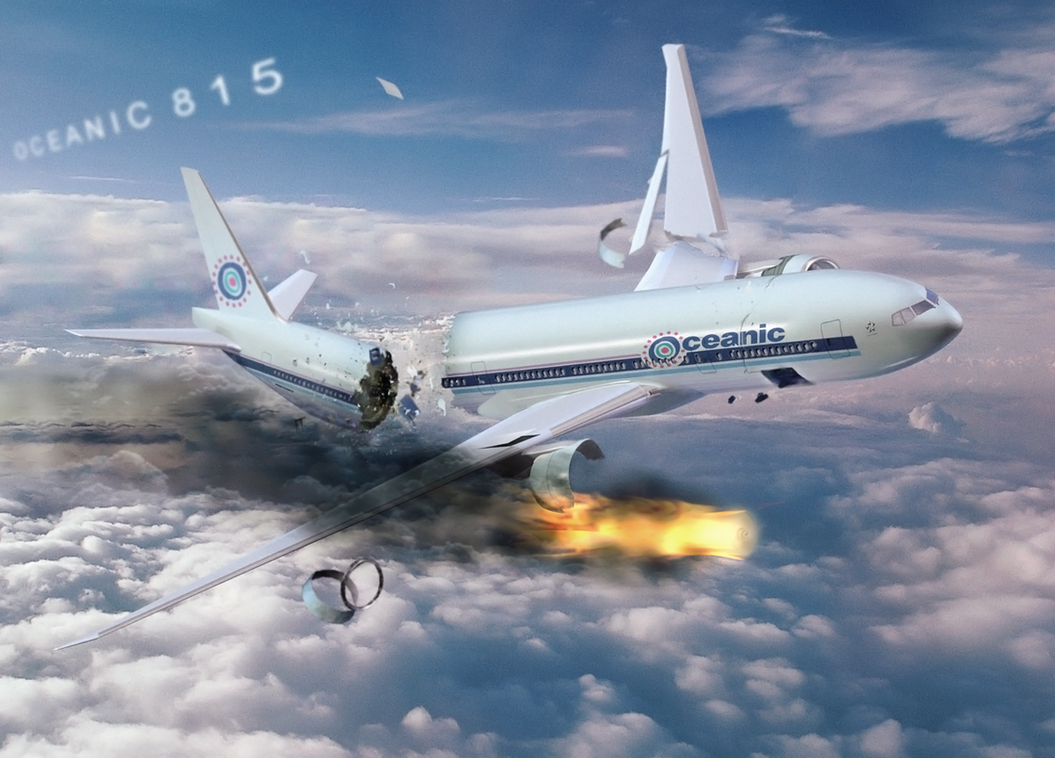
Here's a link to a Wiki about a 121 episode documentary on the disappearance and presumed crash of Oceanic Flight 815. You can thank me later.

http://lostpedia.wikia.com/wiki/Lost

HollywoodBQ
How long do you want to ignore this user?
AG
Ulysses90 - thanks for posting the pic. I never realized that Oceanic was part of the Star Alliance. I could have flown them and got mileage credit on United.
ABattJudd
How long do you want to ignore this user?
AG
A friend of my brother's in Dallas is a Captain and a trainer for American.

He told me that you should basically avoid any airlines from non-English-speaking countries. The training regimines for those pilots are downright laughable. He also said he absolutely hates training pilots from Muslim nations. When something goes wrong, they simply assume that it is Allah's will for them to die, and they go hands-off.

Greutzmachers -- Goin' commando!
CanyonAg77
How long do you want to ignore this user?
AG
quote:
When something goes wrong, they simply assume that it is Allah's will for them to die, and they go hands-off.

I read a book years ago about American instructors teaching helicopter pilots in Iran (under the Shah) When they tried to simulate engine failure to teach auto-rotation, the Iranian students would simply fold their arms and say "Insha'Allah". Problem was solved by getting them to believe that Allah wanted them to save the helicopter.

And there's lots of stuff online about Oriental pilots and their absolute refusal to contradict authority. Like the Asiana crash a few months ago, the pilot at the controls was senior, and his co-pilots/underlings would not tell him he was screwing up and about to crash the plane.

My inside source who trains Japanese military pilots (among others) says it is well known to be careful when asking Japanese students if they understand what you're telling them. They will invariable answer "Yes sir" regardless of whether they do or do not understand. Often it takes several tries for them to say "No sir". It's just not in their culture.


[This message has been edited by CanyonAg77 (edited 1/8/2014 9:19a).]
Ulysses90
How long do you want to ignore this user?
AG
One of my favorite books on human performance and training is Gary Klein's Sources of Power: How Experts Make Decisions. In the book he relates the story of a Libyan airliner with a mixed Libyan-French crew that took off from Benhazi on a flight to Cairo. The flight crew, who was enjoying some champagne as they cruised at altitude, thought that hey were on a heading toward Cairo when in fact they were heading into Israeli air space. What followed was the intercept by Israeli F-4s and then a bunch of really unbelievable and tragic events. Better to read that example because I can't do it justice.

http://books.google.com/books?id=nn1kGwL4hRgC&pg=PA48&lpg=PA48&dq=gary+klein+sources+of+power+libyan&source=bl&ots=z0dR_vQn9n&sig=PLCD5nRxEMhX9-qQTBscTS2uOQc&hl=en&sa=X&ei=6N_NUv7GAYTPkQeFpoGoDQ&ved=0CDsQ6AEwAg#v=onepage&q=gary%20klein%20sources%20of%20power%20libyan&f=false
ABattJudd
How long do you want to ignore this user?
AG
I just read through that case study, and the problem is clear - blame the French.

That is pretty much my philosophy of history and life in general.

Greutzmachers -- Goin' commando!
Brewskis
How long do you want to ignore this user?
AG
I have a similar background to CanyonAg's 'inside source', and will confirm his story (although usually the Japanese pilots do better than a good number of American pilots).

Middle Eastern pilot trainees are the absolute worst. I have seen the "Allah's will" mentality first hand and I had to tell the student that I'm in the airplane too, and I'm sure as hell not ready to go yet.

I am most impressed with the Singaporean students that I fly with. They have a significantly more westernized culture than the Japanese, but are still extremely intelligent and disciplined. I hope they don't become our enemies one day, because they are pretty good.

When I teach pilots who were airline guys in a previous career, I am often dumbfounded at the lack of 'stick and rudder skills' that I see. Basic things like recovering from a full stall aren't emphasized like they should be. Also, if I take the GPS away from them, they are often lost and unable to find their way around visually or on radio navigational aids. That being said, we usually beat that stuff out of them after a few flights and they turn out just fine.

[This message has been edited by Brewskis (edited 1/11/2014 11:19a).]
CanyonAg77
How long do you want to ignore this user?
AG
The Japanese pilots are fine. The problem with most international students is language. They may have a rudimentary knowledge of English, but aviation has its own lingo, and throw a little slang in there.....

Well, just image going to Japan and learning a very technical skill in a very short time, all while speaking Japanese.

Somewhere I have a picture she took of a Japanese student's writing on a whiteboard, with the word "hydraurics".
Brewskis
How long do you want to ignore this user?
AG
I have noticed our Japanese student does very well when the mission goes 'as scripted', but struggles a little when it comes time to just 'make it happen' and roll with the punches. A lot of students struggle with this, but the ones that do (that are American at least) are usually the 'weak swimmers' to begin with. With the Japanese guy, it's either excellent, or poor. He's a good guy though. I'm glad he came here to train.

[This message has been edited by Brewskis (edited 1/11/2014 2:09p).]
CanyonAg77
How long do you want to ignore this user?
AG
After the Asiana crash, I found an article written by a guy who trained Korean pilots. All knew their book (stuff) on day one. But since private aviation is all but banned, none had practical experience. And all were great on procedures and checklists, but if you turned off all the bells and whistles and asked them to simply fly the plane......panic city.

He said a sure way to flunk a Korean pilot on a simulator ride was to set the plane up on a straight-in approach on a clear day, turn off all the avionics, and tell him to land the plane.


As I've said before, the difference between aviators and technicians.
airplane driver
How long do you want to ignore this user?
S
We had a Japanese student who came in and apologized to his instructor for not studying harder. He only made a 97 on the FAA Instrument (Written in those days) Exam. I teach a college level aerodynamics course and I tell them the airplane flies because of Bernoulli and Newton - not Marconi. They don't know who Marconi was so I usually get no response from them.

[This message has been edited by airplane driver (edited 1/11/2014 7:49p).]
Refresh
Page 1 of 1
 
×
subscribe Verify your student status
See Subscription Benefits
Trial only available to users who have never subscribed or participated in a previous trial.