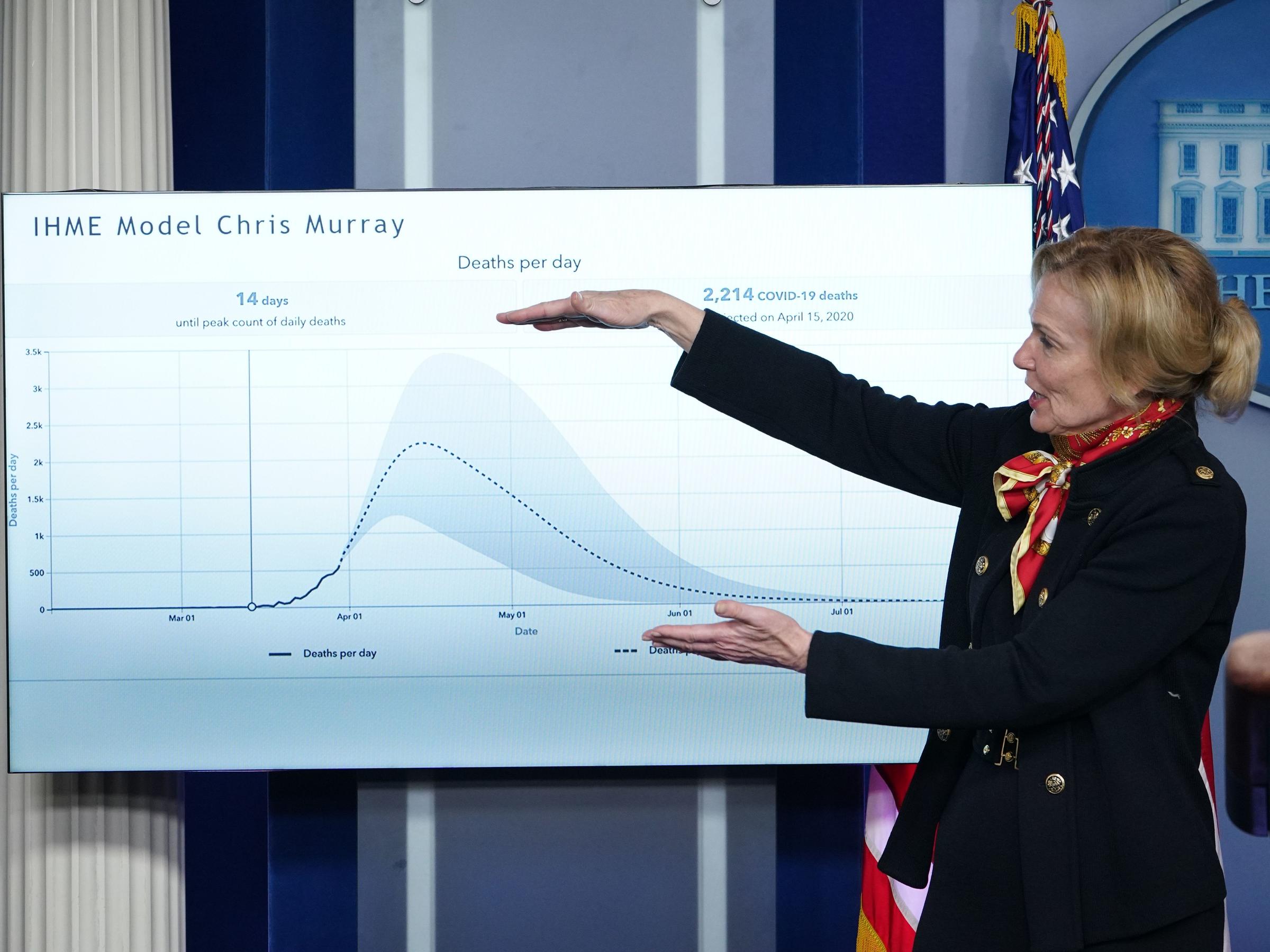
Here's another way to model it.
Assumptions:
1. Italy is the worst case globally in terms of deaths per capita
2. NY State is the worst case for the USA as a whole
3. Italy's deaths per day has peaked and now they are on the downslope of the curve.
4. NY will equal Italy's death's per capita
5. Number of deaths on the downslope of the curve will be equal to or less than the totals leading up to the peak due to social distancing measures.
6. We'll assume the rest of the US follow the same death rates as NY for worst case.
7. We are assuming social distance measures stay in place in US.
There are currently ~13,000 deaths in Italy with a population of 60,000,000. They are at the peak, so we can assume their total deaths will equal x2 so ~26,000.
NY has a population of 20,000,000, so 1/3 the size of Italy. We will assume 1/3 of deaths of Italy so ~9,000 deaths.
Overall population of US is 330,000,000 roughly 16.5 times the size of NY state.
9,000 x 16.5 = 148,500 deaths. This is worst case.
Now NYC is 18,000,000 of NY State's 20,000,000 people.
The population density of NYC is 4 times bigger than Los Angeles and much more dense than any other City in the US. How much that factors in, I don't know.
Will the US relax social distancing measures at some point in the next couple months? Probably yes. How does that factor in? We don't know, I haven't seen any other country relax social distancing yet and what the impact was.
Very hard to predict here, but I would think 100,000 would be on the high end.