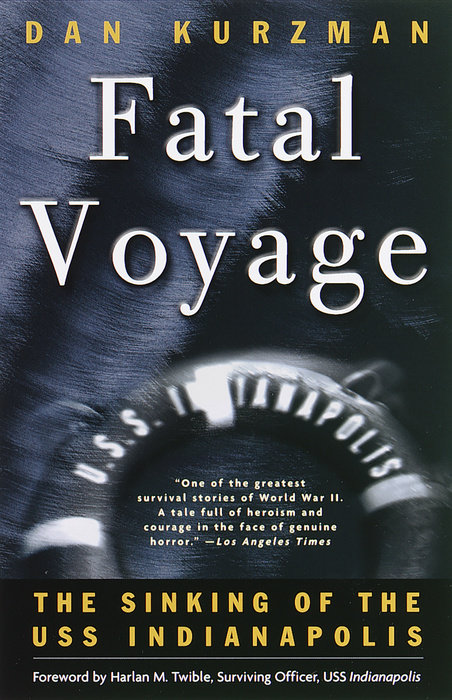
Captain, Once a Scapegoat, Is AbsolvedFloating in the Pacific Ocean under a broiling sun, delirious from thirst, nearly 600 died over the next four days. Many were killed by sharks. By the time a patrol plane found them, just more than 300 were still alive. One was Captain McVay, who was court-martialed soon after the war and found guilty of endangering his vessel by failing to steer a zigzag course to avoid torpedoes.
Captain McVay was stripped of some seniority, although Navy Secretary James Forrestal lifted the sentence because of Captain McVay's bravery in combat before the sinking. He was promoted to rear admiral upon his retirement in 1949. But he never really recovered from his ordeal, and he shot himself to death in 1968.
Many people, including survivors of the Indianapolis, have defended him over the years. They say that just before it was torpedoed, the cruiser had carried a top-secret cargo -- the final components of the atomic bomb that would be dropped on Hiroshima on Aug. 6, 1945.
Some historians, citing documents declassified years later, have attributed the slowness of the rescue to the secrecy surrounding the atomic bomb mission. Some have suggested, too, that senior Navy officers knew there might have been a Japanese submarine in the area but did not warn the cruiser out of fear of disclosing that the Navy had broken Japan's naval codes.