Did Archaeologists find the Trojan Horse?

1,942 Views | 3 Replies | Last: 4 yr ago by KingofHazor
KingofHazor
How long do you want to ignore this user?
This article quotes some who think that they did:

Did archaeologists find the Trojan Horse? - The Jerusalem Post (jpost.com)
nortex97
How long do you want to ignore this user?
AG
Maybe, and while that would be cool, color me skeptical.

Quote:

"The carbon dating tests and other analysis have all suggested that the wooden pieces and other artifacts date from the 12th or 11th centuries B.C.," says Professor Morris. "This matches the dates cited for the Trojan War, by many ancient historians like Eratosthenes or Proclus. The assembly of the work also matches the description made by many sources. I don't want to sound overconfident, but I'm pretty certain that we found the real thing!"
We are talking about a few fir planks which are carbon dated to within a couple of centuries. It's pretty implausible that (a) the horse would have just been stored/buried on site for 30 centuries, and also that this dating really nails it down in any 'high confidence' way.

The speculative (artistic) images of the horse also don't always mean it was 40 feet across/tall etc.
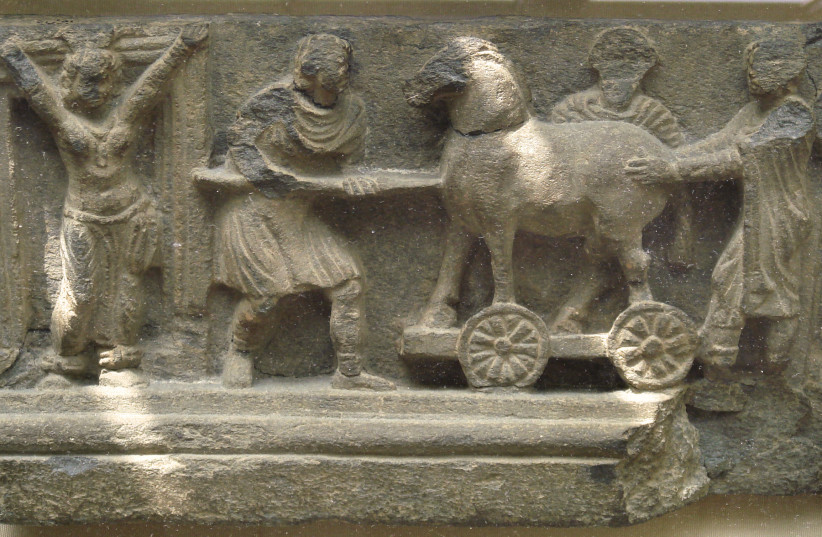

KingofHazor
How long do you want to ignore this user?
I tend to agree. Although the "horse" wouldn't have been "stored", but rather become part of the rubble and debris that was Troy after the Greek victory.

It's possible, but it would take a lot more than what's described in the article to be convincing.

Nevertheless, it's interesting. We also must keep in mind that at one time all the world's smartest people and most knowledgeable archaeologists said that Troy itself was merely a fable. It took a dedicated layman to prove them all wrong.
aalan94
How long do you want to ignore this user?
AG
I very seriously doubt it. I've been to Hissarlik. There's no way that something like that is in the city. It's basically 7 cities on top of each other, and archaeologists have dug through BEYOND the city associated with the war in most areas. It's also very small. There is a lot of truth to Homer's account. The walls are angled just like he said they were, a very distinctive feature. But when it comes to size, he exaggerated greatly.
KingofHazor
How long do you want to ignore this user?
Original article almost certainly was based on a hoax. Apparently, there was an almost identical article written back in 2014:

Turkey: Archaeologists Discover Remains of Trojan Horse (archive.org)
Refresh
Page 1 of 1
 
×
subscribe Verify your student status
See Subscription Benefits
Trial only available to users who have never subscribed or participated in a previous trial.