US POWS in WW2

4,200 Views | 38 Replies | Last: 28 days ago by agracer
BigJim49 AustinNowDallas
How long do you want to ignore this user?
AG
Daughter Class of 85 asked if I knew anything about US POWS in WW2. I said no at the time,

Then I remembered the 46 Muster at Pearl when our speaker was the highest ranking officer

POW probably - Gen. GEORGE MOORE! He sat rifghr behind me , There were about 25 Ags at the Muster.

ABATTBQ has done a fabulous job in listing Aggies who died in WW2. But I dont know of any discussions

about POWs,

Anyone want to take on this task?
ABATTBQ87
How long do you want to ignore this user?
AG
BigJim49 AustinNowDallas said:

Daughter Class of 85 asked if I knew anything about US POWS in WW2. I said no at the time,

Then I remembered the 46 Muster at Pearl when our speaker was the highest ranking officer

POW probably - Gen. GEORGE MOORE! He sat rifghr behind me , There were about 25 Ags at the Muster.

ABATTBQ has done a fabulous job in listing Aggies who died in WW2. But I dont know of any discussions

about POWs,

Anyone want to take on this task?

I have information on Aggies held POW by the Japanese, and those on Hell Ships.

Names from the AFS: https://www.aggienetwork.com/news/161722/aggies-listed-as-mia-from-world-war-ii/

This was one of the resource websites I used:

https://storymaps.arcgis.com/stories/f296d62a8573470f8b8725506f353aca
OldArmy71
How long do you want to ignore this user?
AG

My uncle, Paul A. Brown '28, Capt. USMC, was captured on Corregidor, survived the Oryoku Maru sinking, but was transferred to another ship that made it to Japan at the end of January, 1945.

He was sent to ***uoka POW Camp #1 in ***uoka City, on the island of Kyushu, Japan, and died there approximately Feb. 11, 1945.

He was awarded the Silver Star and promoted to major. His remains were recovered after the war and reburied in a common grave in the Jefferson Barracks national military cemetery in St. Louis.

From the 1943 Longhorn (the yearbook):


Common grave at National Cemetery:


OldArmyCT
How long do you want to ignore this user?
AG
My dad was a bombardier in the 392d Bomb Group based in Wendling, England. Their website is b24 dot net.
A lot of them became POW's, some even wrote books. Here is a link to some stories.
https://www.b24.net/wendlingStories.htm
AgTDub
How long do you want to ignore this user?
AG
Grandfather was captured by the japs on Kwajalein. Tortured for a couple of days before he escaped and met back up with a marine patrol.

Scars on his back from that experience till the day he died.
ABATTBQ87
How long do you want to ignore this user?
AG
Honor Through The Ages: Aggie's Bataan Journal Emerges Texas A&M Stories

File "P.O.W./C.I.: C.G. Brundrett, Folder 2." Diary of Capt George C. Brundrett, Aug 1942 Oct 1943, Cabanatuan, file code 999-2-203.File "P.O.W./C.I.: C.G. Brundrett, Folder 2." Diary of Capt George C. Brundrett, Aug 1942 Oct 1943, Cabanatuan, file code 999-2-203 | DPLA

About George C. Brundrett - The Philippine Diary Project
ABATTBQ87
How long do you want to ignore this user?
AG
Capt. TRAVIS E PERRENOT - Service Member Profile, Class of 1934

Capt. CHARLES M DEMPWOLF - Service Member Profile, Class of 1935

Capt. WILBERT A CALVERT - Service Member Profile, Class of 1937

2nd Lt. HOWARD P HARDEGREE - Service Member Profile, Class of 1939

2nd Lt. ORMAN L FITZHUGH - Service Member Profile, Class of 1940

OldArmy71
How long do you want to ignore this user?
AG
Truly a vast repository of information on the Jap POW camp my uncle died in, ***uoka Camp #1, on the island of Kyushu.

http://mansell.com/pow_resources/camplists/***uoka/***_01_***uoka/***uoka_01/Page01.htm

The filter won't let it print and so the link doesn't work, but the word is F U K U O K A
ABATTBQ87
How long do you want to ignore this user?
AG
Truly a vast repository of information on the Jap POW camp my uncle died in, ***uoka Camp #1, on the island of Kyushu.

bypassing the filter by clicking the link
OldArmy71
How long do you want to ignore this user?
AG
Thank you!
Cinco Ranch Aggie
How long do you want to ignore this user?
AG
There were US POWs in Hiroshima on this day in 1945. I had never done a deep dive into who these men were, until earlier today when I found this site https://hiroshima-pows.org/ You have to navigate to another page via a button on this page. I haven't read everything yet, but first glance makes me think this is a pretty detailed history. Frankly, I'm surprised there were any records left of who these men were.
wangus12
How long do you want to ignore this user?
AG
My great uncle was captured in Manhay, Belgium when he and several others were overrun and captured by the Germans on December 30th 1944.

He spent the last 5 months of the war moving around several POW camps. I have the list of camps he was in as he was moved around, but I don't know how long his duration was in each camp.

  • He was initially sent to Stalag XIIA in Limburg, Germany near Frankfurt
  • Then he went to Stalag IV-B with most of the other Americans captured in the Bulge near Mhlberg in eastern Germany
  • He was then moved to Stalag III-B in Furstenberg, Germany towards the southeast of Berlin
  • He was then moved to Stalag III-A in Luckenwalde, just 30 miles south of Berlin.
His POW camp was eventually liberated by the Red Army in late April 1945. American prisoners were returned to American hands in early May. He did use to say that the treatment in the POW camp was in his opinion, actually worse during the week or 2 that the Russians were in charge.

He returned to the US in June of 1945.
ABATTBQ87
How long do you want to ignore this user?
AG
SSgt Joe Wayne Bradford, class of 1940


ABATTBQ87
How long do you want to ignore this user?
AG
Cinco Ranch Aggie said:

There were US POWs in Hiroshima on this day in 1945. I had never done a deep dive into who these men were, until earlier today when I found this site https://hiroshima-pows.org/ You have to navigate to another page via a button on this page. I haven't read everything yet, but first glance makes me think this is a pretty detailed history. Frankly, I'm surprised there were any records left of who these men were.

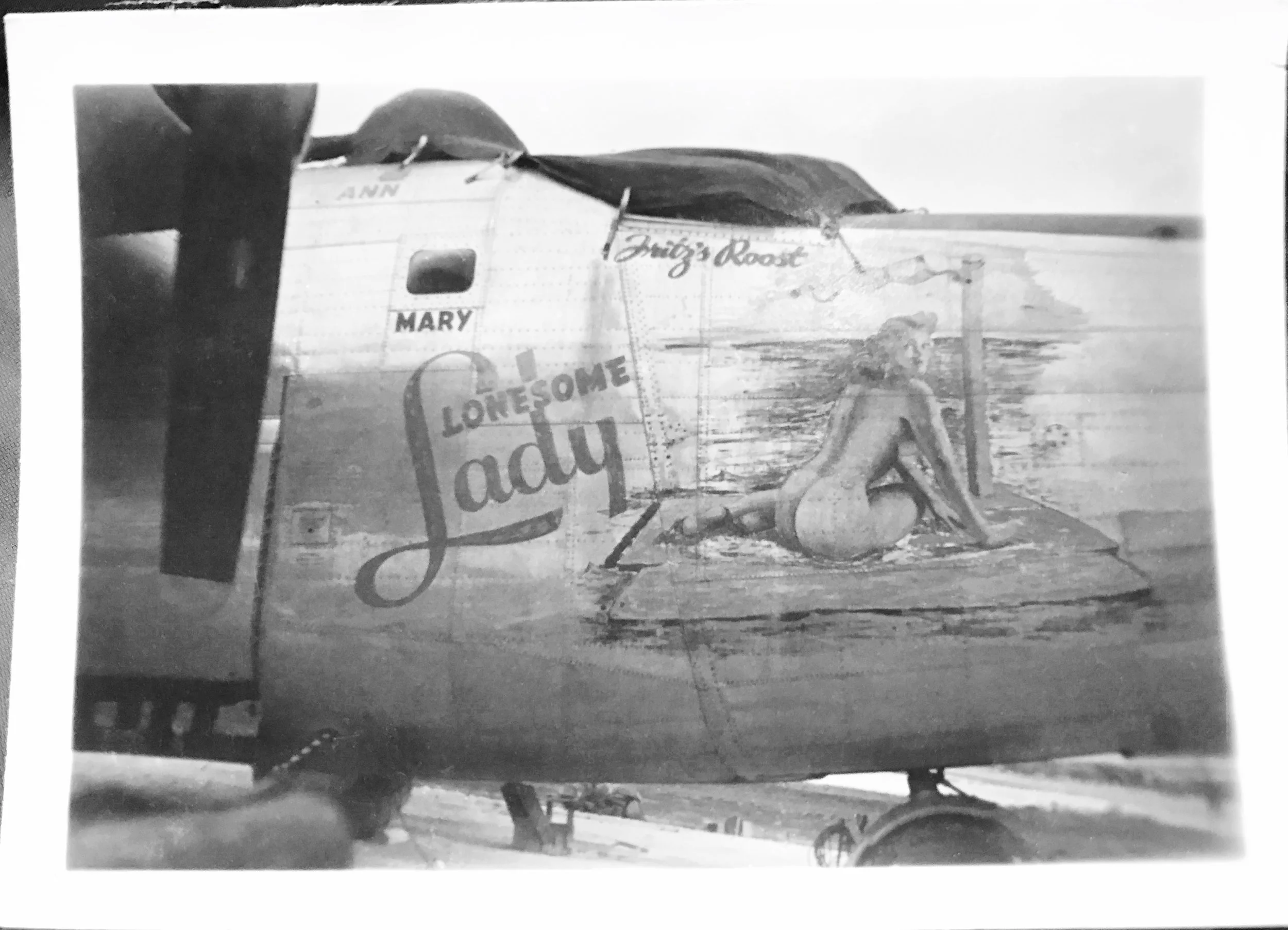
2nd Lt Thomas C Cartwright, Pilot B-24 Bomber Replacement Crew 42B Lonesome Lady
[url=https://hiroshima-pows.org/new-page-29]


[/url]After the war, Tom became somewhat famous in the world of Animal Science, thanks to his education and teaching at Texas A&M University.

Tom began his university studies at Clemson University but left to serve in the US Army Air Corps during World War II. His military service was in the Pacific theater, where he was the pilot of a B-24 bomber. His plane, The Lonesome Lady, was shot down during a mission over Hiroshima, Japan, on July 28, 1945. He was captured and interrogated in Hiroshima. He was then sent to Tokyo and ultimately to a POW camp in Tokyo Bay, while six members of his crew remained imprisoned in Hiroshima, where they perished in the atomic blast on August 6. The memory of this loss never faded for him, and he campaigned quietly to ensure that the sacrifice of his crew was not forgotten. He told this story in a memoir, A Date With The Lonesome Lady, and in the documentary movie Genbaku-Shi, which led to interactions with the Hiroshima Peace Memorial Museum.

Following the war, Tom returned to Clemson and completed a Bachelor of Science degree. He undertook graduate studies in Animal Sciences at Texas A&M University, from which he received his Ph.D. He then joined the faculty at Texas A&M, where he enjoyed a distinguished career as a professor and researcher. He pioneered the use of computer-based statistical methods in genetic studies of traits in cattle and other animals, and he conducted projects around the world that had the goal of improving the standard of living for the poor. He traveled extensively in his work, and his children came to expect travel photos that included cattle or goats. A Professor Emeritus at the time of his death, he leaves a legacy of an important body of scientific work, a reputation for integrity, and many former students who themselves have had distinguished careers and who remained devoted to him, as he was to them.
wangus12
How long do you want to ignore this user?
AG
Had the pleasure of meeting Dr. Cartwright multiple times as a kid. My mom taught in the Animal Science department for nearly 40 years at TAMU. I never knew this about him.
Gunny456
How long do you want to ignore this user?
AG
My uncle (dad's brother) Was captured on the Bataan Peninsula and survived the Bataan Death March. Was shipped to Japan in the hull of a ship and remained in POW camps in Japan till wars end. He weighed 76lbs when returned to the states.
He lived a successful life in San Antonio working for the government. Lived to be 80. Buried at Ft. Sam.
Propane & Accessories
How long do you want to ignore this user?
AG
A decent source would be John A. Adams book The Fightin' Texas Aggie Defenders of Bataan & Corregidor
a total of 89 Aggies served on the islands during the defense
  • 30 returned home
  • 6 KIA
  • 31 died onboard Hell Ships
  • 15 died in Camp/ on March
  • 2 MIA
  • 5 Escaped (4 survived the war, one KIA)
Overall about 2/3 Aggies who were on the islands never saw the States again, the most common cause of death was by being torpedoed while onboard a Japanese Prison Ship called "Hell Ships", these ships were typically not clearly marked as POW ships which resulted in 7 ships being sunk by American planes and Submarines. The worst sinking was the Arisan Maru on October 21, 1944 she had roughly 1,800 Prisoners and was sunk by the USS Shark. After the attack, two Japanese destroyers were able to sink the Shark and then they went back to the wreck to look for survivors. The destroyers refused to rescue any POW's and only rescued the Japanese crew of the transport. Most of the POW's survived the sinking but left to the elements in total 1,791 POW's would perish, including 12 Aggies. The nine survivors were able to make it to mainland China, where four were rescued by US Forces in the CBI theater, 5 were recaptured by the Japanese, with one dying shortly after being captured. In all the sinking of the Arisan Maru is the largest loss of life in American maritime history.

Another Horrendous ship was the Shinyo Maru with around 750 POW's she was torpedoed on September 7th, 1944, the Captain of the ship grounded her to prevent her from fully sinking . Initially after the torpedoes hit, the guards started dropping grenades and shooting Prisoners who tried to escape as chaos erupted on the ship the POW's onboard tried to swarm and kill the guards on the ship. During the scuffle about 83 POW's were able to swim away and were recovered by Guerillas and would be rescued by the USS Narwhal, among them were two Aggies :t. Harry Discher '29 and Lt Roy B . Russell '42.The Japanese were also trying to scoop up POW's with around being recovered by a Japanese oil tanker lined up and executed. In total of the 750 POW's 667 would die during the event, including 5 Aggies.

ABATTBQ87
How long do you want to ignore this user?
AG
Heroes of the Philippine Campaign, Texas Aggie, July 1, 1943

ABATTBQ87
How long do you want to ignore this user?
AG
Propane & Accessories said:

The worst sinking was the Arisan Maru on October 21, 1944 she had roughly 1,800 Prisoners and was sunk by the USS Shark. After the attack, two Japanese destroyers were able to sink the Shark and then they went back to the wreck to look for survivors. The destroyers refused to rescue any POW's and only rescued the Japanese crew of the transport. Most of the POW's survived the sinking but left to the elements in total 1,791 POW's would perish, including 12 Aggies.

14 Aggies died on the Arisian Maru

BOYD WILLIAM G Camp #1 - Cabanatuan Arisan Maru
BURGESS, EDGAR B A&M POW Camp #1 - Cabanatuan Arisan Maru
COLLIER WILLIAM J JR A&M POW Camp #4 - O'Donnell Tarlac, Luzon, Arisan Maru
CURTIS WILLIAM A A&M POW Camp #1 - Cabanatuan Arisan Maru
GASKELL CHARLES E A&M POW Philippines Unstated Arisan Maru
HENRY, JAMES M A&M POW Camp #2 - Davao Mindanao, Philippines Arisan Maru
HOLMES JAMES R A&M POW Camp #1 - Cabanatuan Arisan Maru
JAMES, ANDY M A&M POW Camp #1 - Cabanatuan Arisan Maru
McCLUSKEY, JOHN B A&M POW Philippines Unstated Arisan Maru
McMILLAN, GEORGE P A&M POW Philippines Unstated Arisan Maru
MELVIN MILLARD R A&M POW Camp #2 - Davao Mindanao, Philippines Arisan Maru
SCHUTTE HENRY J A&M POW Camp #4 -O'Donnell Tarl, Luzon, Philippines Arisan Maru
STUKENBURG, JOHN D A&M POW Philippines Unstated Arisan Maru
VICK ROY M JR A&M POW Camp #1 - Cabanatuan Arisan Maru
ABATTBQ87
How long do you want to ignore this user?
AG
Propane & Accessories said:

Another Horrendous ship was the Shinyo Maru with around 750 POW's she was torpedoed on September 7th, 1944, the Captain of the ship grounded her to prevent her from fully sinking . Initially after the torpedoes hit, the guards started dropping grenades and shooting Prisoners who tried to escape as chaos erupted on the ship the POW's onboard tried to swarm and kill the guards on the ship. During the scuffle about 83 POW's were able to swim away and were recovered by Guerillas and would be rescued by the USS Narwhal, among them were two Aggies :t. Harry Discher '29 and Lt Roy B . Russell '42.The Japanese were also trying to scoop up POW's with around being recovered by a Japanese oil tanker lined up and executed. In total of the 750 POW's 667 would die during the event, including 5 Aggies.

5 Aggies on the Shinyo Maru

CHENAULT, MAXEY C A&M POW Camp #2 - Davao Mindanao, Philippines Shinyo Maru
FROEBEL GUS H A&M POW Camp #2 - Davao Mindanao, Philippines Shinyo Maru
MILLER ROSS I A&M POW Camp #2 - Davao Mindanao, Philippines Shinyo Maru
ROGERS RUFUS H A&M POW Camp #1 - Cabanatuan Shinyo Maru
TAYLOR WILLIAM M JR A&M POW Philippines Unstated Shinyo Maru
McInnis
How long do you want to ignore this user?
AG
As the war approached its end the Japanese began murdering POWs. One survivor managed to escape so army intelligence knew this was happening. A POW camp in the Philippines held close to 700 American, British and Australian prisoners. Most of them were survivors of the Bataan death marge. McArthur made their rescue a high priority, to say the least.

Hampton Sides' book " Ghost Soldiers" tells of the planning and execution of the mission which was successful to such an amazing degree that it almost seems like fiction. It's really one of the most interesting books I've ever read.


Smeghead4761
How long do you want to ignore this user?
One of the things that should be, but usually isn't, brought up in discussions on the decision to drop the atomic bomb(s) is that the Japanese command in Malaya had issued orders to execute all Allied* POWs held by that command if/when the British landed there. Allied intelligence was aware of this, through ULTRA.

Those landings were scheduled for September 1945.

*I'm pretty sure most, if not all, of those POWs were British empire troops - Brits, Aussies, and Indians - not US.
ABATTBQ87
How long do you want to ignore this user?
AG
McInnis said:

As the war approached its end the Japanese began murdering POWs. One survivor managed to escape so army intelligence knew this was happening. A POW camp in the Philippines held close to 700 American, British and Australian prisoners. Most of them were survivors of the Bataan death marge. McArthur made their rescue a high priority, to say the least.

Hampton Sides' book " Ghost Soldiers" tells of the planning and execution of the mission which was successful to such an amazing degree that it almost seems like fiction. It's really one of the most interesting books I've ever read.


If you liked the book, you'd probably enjoy the movie version titled "The Great Raid"
McInnis
How long do you want to ignore this user?
AG
After I read the book I thought what a great movie it would make. What a pleasant surprise you have just given me.
Spore Ag
How long do you want to ignore this user?
There was a book but cannot remember the title about escapees on the death march becoming guerrilla fighters in the Philippines.
ABATTBQ87
How long do you want to ignore this user?
AG
Spore Ag said:

There was a book but cannot remember the title about escapees on the death march becoming guerrilla fighters in the Philippines.


It could be "Behind Japanese Lines: An American Guerrilla in the Philippines" by Ray C. Hunt (with Bernard Norling).
The book is an account of the author's experience, where he:
Escaped from the Bataan Death March.
Helped organize and lead guerrilla activity against the Japanese on Luzon during World War II.

Another possibility, focusing on another major figure:
"American Guerrilla: The Forgotten Heroics of Russell W. Volckmannthe Man Who Escaped from Bataan, Raised a Filipino Army against the Japanese, and Became the True 'Father' of Army Special Forces" by Mike Guardia.
YZ250
How long do you want to ignore this user?
Ghost Soldiers is my favorite but another great read about a raid in Luzon is Rescue at Los Banos. And then books about people who helped the POWs or underground such as Agent High Pockets, The Indomitable Florence Finch, and Miss U Angel of the Underground are excellent.
BQ78
How long do you want to ignore this user?
AG
I knew a lady who as a teenager was held by the Japanese at Los Banos. When the Rangers rescued her before they could talk, she thought the Germans were rescuing her. She thought this because when she was captured in 1941, the US Army wore the Brodie helmet and not the Steel pots.
YZ250
How long do you want to ignore this user?
Wow! Captured in 1941. I would assume she was imprisoned with her parents at Santo Tomas initially. Probably political prisoners since it was so early in the war. I know someone from Laguna whose father was a professor and was imprisoned.
BQ78
How long do you want to ignore this user?
AG
That's correct. Her father was an army officer, her name was Margaret Goloughly. Before they redid the Nimitz Museum, her picture taken upon release was on one of the walls, just skin and bones. When I first met her and until she died she was a big (huge) beautiful woman.
Propane & Accessories
How long do you want to ignore this user?
AG
ABATTBQ87 said:

Propane & Accessories said:

The worst sinking was the Arisan Maru on October 21, 1944 she had roughly 1,800 Prisoners and was sunk by the USS Shark. After the attack, two Japanese destroyers were able to sink the Shark and then they went back to the wreck to look for survivors. The destroyers refused to rescue any POW's and only rescued the Japanese crew of the transport. Most of the POW's survived the sinking but left to the elements in total 1,791 POW's would perish, including 12 Aggies.

14 Aggies died on the Arisian Maru

BOYD WILLIAM G Camp #1 - Cabanatuan Arisan Maru
BURGESS, EDGAR B A&M POW Camp #1 - Cabanatuan Arisan Maru
COLLIER WILLIAM J JR A&M POW Camp #4 - O'Donnell Tarlac, Luzon, Arisan Maru
CURTIS WILLIAM A A&M POW Camp #1 - Cabanatuan Arisan Maru
GASKELL CHARLES E A&M POW Philippines Unstated Arisan Maru
HENRY, JAMES M A&M POW Camp #2 - Davao Mindanao, Philippines Arisan Maru
HOLMES JAMES R A&M POW Camp #1 - Cabanatuan Arisan Maru
JAMES, ANDY M A&M POW Camp #1 - Cabanatuan Arisan Maru
McCLUSKEY, JOHN B A&M POW Philippines Unstated Arisan Maru
McMILLAN, GEORGE P A&M POW Philippines Unstated Arisan Maru
MELVIN MILLARD R A&M POW Camp #2 - Davao Mindanao, Philippines Arisan Maru
SCHUTTE HENRY J A&M POW Camp #4 -O'Donnell Tarl, Luzon, Philippines Arisan Maru
STUKENBURG, JOHN D A&M POW Philippines Unstated Arisan Maru
VICK ROY M JR A&M POW Camp #1 - Cabanatuan Arisan Maru


Thanks for the correction, defenitly made me depressed reading about the Hell ships they certainly earned that moniker. I need to dig in more to Wake, Guam, and in Java since US POW's were not too common in the PTO outside of the early Japanese blitz and the occasional downed airmen.
ABATTBQ87
How long do you want to ignore this user?
AG
Five alumni of Texas A&M College who were serving as officers in the U.S. militaryLieutenant Colonel Rufus H. Rogers ('26), Captain Gus H. Froebel ('35), Lieutenant Maxey C. Chenault ('37), Lieutenant William M. Taylor, Jr. ('38), and Captain Ross I. Miller ('39)shared a tragic final destiny on September 7, 1944.

These men were captured by the Japanese Army in 1942 following the surrender of Bataan and Mindanao. They endured years of brutal captivity in internment camps across the Philippines, including Davao Prison Camp No. 2 (Froebel, Chenault, Miller) and Cabanatuan (Rogers).

After their long ordeal, the five Aggies were among the American prisoners loaded onto the Japanese prison ship, the Shinyo Maru, for transfer. On September 7, 1944, the unmarked vessel was sunk by American torpedoes off the western coast of Mindanao. Amidst the chaos of the sinking and a subsequent massacre by Japanese guards, all five men were among the 668 American POWs who perished.

They were officially declared "Missing In Action, prisoner of war," and their names are recorded on the Tablets of the Missing at the Manila American Cemetery. Each was posthumously awarded the Prisoner of War Medal and the Purple Heart, with Captain Miller also having received the Silver Star for gallantry.

CHENAULT, MAXEY C A&M POW Camp #2 - Davao Mindanao, Philippines Shinyo Maru
FROEBEL GUS H A&M POW Camp #2 - Davao Mindanao, Philippines Shinyo Maru
MILLER ROSS I A&M POW Camp #2 - Davao, Mindanao, Philippines Shinyo Maru
ROGERS RUFUS H A&M POW Camp #1 - Cabanatuan Shinyo Maru
TAYLOR WILLIAM M JR A&M POW Philippines Unstated Shinyo Maru
BQ_90
How long do you want to ignore this user?
AG
Why didn't the IJN put POW a markings on those ships or did that matter at all and we'd sink anything moving?
ABATTBQ87
How long do you want to ignore this user?
AG
BQ_90 said:

Why didn't the IJN put POW a markings on those ships or did that matter at all and we'd sink anything moving?

because they didn't follow any Geneva Convention rules regarding the care of POWs; POWs were disposable and held no honor in their culture
Smeghead4761
How long do you want to ignore this user?
ABATTBQ87 said:

BQ_90 said:

Why didn't the IJN put POW a markings on those ships or did that matter at all and we'd sink anything moving?

because they didn't follow any Geneva Convention rules regarding the care of POWs; POWs were disposable and held no honor in their culture

It wasn't necessarily a problem with Japanese culture per se, but of the militaristic "bushido" cult (which was not traditional, samurai Bushido, but a very warped interpretation of it) which took over the Japanese military as the 20th century progressed.

Russian PoWs - some 70,000 of them - captured during the Russo-Japanese War from 1904-1905 were actually treated quite well, and in accordance with the recently adopted Hague Convention of 1899.

By the start of the full on war with China in 1937, that observance of international norms was completely gone.
Page 1 of 2
 
×
subscribe Verify your student status
See Subscription Benefits
Trial only available to users who have never subscribed or participated in a previous trial.