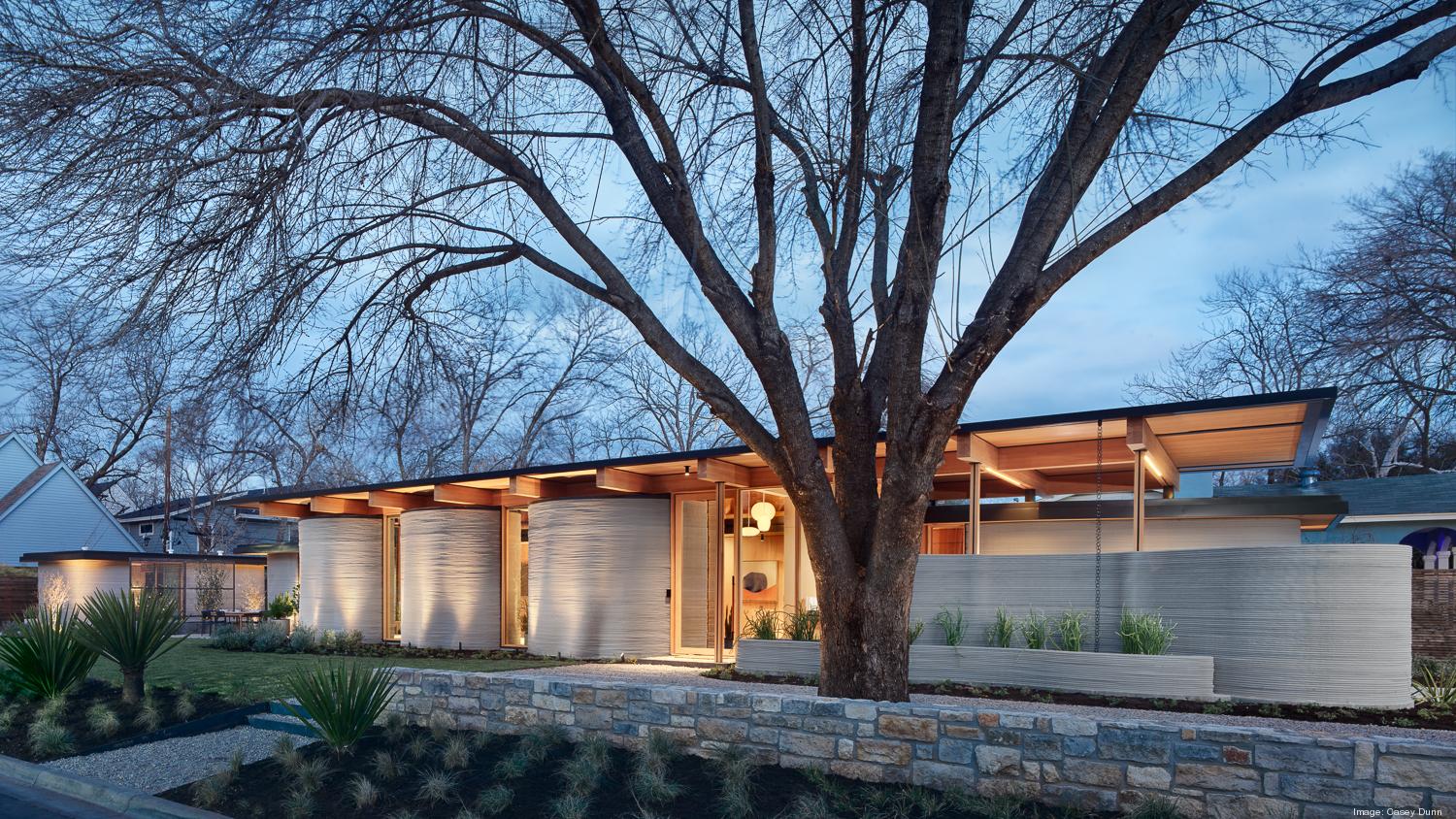
This kind of stuff fascinates me. Printing the houses of tomorrow
A Houston company is printing the world's first near-zero carbon homes. The homes are hurricane proof, pest proof, bullet proof, tornado proof etc... If you drove a car into one of these houses it would total the car and presumably do very little damage to the house. The concrete and steel can support millions of pounds. They printed a 3100 square foot house in Burton and the photos look pretty cool. They aim to be 20-30% cheaper than conventional homes, which would have a huge impact on the possibility of achieving the American dream. The fact that it's being pioneered in Texas makes it even better from my point of view. Emerson said "build a better mousetrap and the world will beat a path to your door." This seems to be an example of that.
"We worked with a company called CyBe in the Netherlands to build a robotic arm, and that arm has about an 11-foot reach, and it can go all the way in a circle around itself," says Lankau. "So, it drives around the foundation of the house, printing sections of the house at a time. So, it'll print a section, drive to the next section, and print the next section.
"So instead of having this many different materials and these many different traits, people that do all these different things, we have a machine that just uses one material and prints the wall."
A Houston company is printing the world's first near-zero carbon homes. The homes are hurricane proof, pest proof, bullet proof, tornado proof etc... If you drove a car into one of these houses it would total the car and presumably do very little damage to the house. The concrete and steel can support millions of pounds. They printed a 3100 square foot house in Burton and the photos look pretty cool. They aim to be 20-30% cheaper than conventional homes, which would have a huge impact on the possibility of achieving the American dream. The fact that it's being pioneered in Texas makes it even better from my point of view. Emerson said "build a better mousetrap and the world will beat a path to your door." This seems to be an example of that.
"We worked with a company called CyBe in the Netherlands to build a robotic arm, and that arm has about an 11-foot reach, and it can go all the way in a circle around itself," says Lankau. "So, it drives around the foundation of the house, printing sections of the house at a time. So, it'll print a section, drive to the next section, and print the next section.
"So instead of having this many different materials and these many different traits, people that do all these different things, we have a machine that just uses one material and prints the wall."