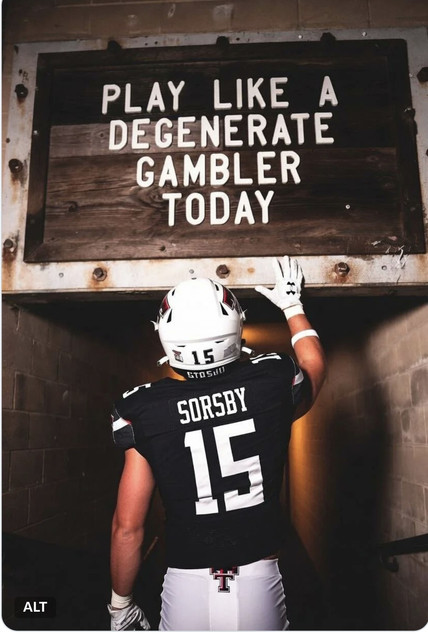
It's ludicrous how Judge Ken Curry issued a temporary injunction that allowed Brandon Sorsby to return to the field because he determined that Sorsby would otherwise face "probable, imminent and irreparable injury.
Though the NCAA is appealing, the ramifications of Curry's initial decision are enormous. For the first time in major American sports, a player known to have bet on his team will be permitted to keep playing.
"It's a major black eye for college athletics," Kansas State athletic director Gene Taylor said. "It is so unacceptable to bet on the sport in which you play."
The rest of college football is outraged. Several schools, including Georgia and Nebraska, have indicated that they will no longer schedule games against Texas Tech in any sport and might cancel contests already on the docket. Even some schools in Texas Tech's own Big 12 Conference are debating similar moves. Commissioner Brett Yormark hastily scheduled a meeting with the league's athletic directors, presidents and chancellors later this week to discuss the outcome.
The NCAA was alerted to Sorsby's gambling and opened an investigation in April before he took a single snap for the team. Shortly afterward, Sorsby entered into a five-week inpatient treatment program for gambling addiction. He said in an affidavit that he placed bets on everything from Romanian soccer to the Nathan's Hot Dog Eating Contest.
Sorsby's lawyers argued in court that given their client's clinically diagnosed gambling addiction, a lifetime ban meant the NCAA was punishing him for having a mental illness. And Curry, the only person whose opinion matters, appears to have agreed. Jeffrey Kessler, one of Sorsby's attorneys, called the outcome "a just result."
"It's not black and white," Texas Tech president Lawrence Schovanec said. "This probably is one of the instruments that will lead to broader changes in how we deal with such matters."
Now, Sorsby is free to embark on his fifth season of college football after a two-game suspension stipulated in the injunction. The games he will miss are against Abilene Christian and Oregon State. Texas Tech has promised to monitor him closely to ensure he is no longer betting.
The NCAA, meanwhile, is hoping an appeals court reinstates Sorsby's ban. Outsiders see just one potential problem: All four judges on the Texas Seventh Court of Appeals went to law school at Texas Tech.
The Quarterback Who Was Banned for Betting on His Own Team Just Got a Hail Mary Reprieve - WSJ
Though the NCAA is appealing, the ramifications of Curry's initial decision are enormous. For the first time in major American sports, a player known to have bet on his team will be permitted to keep playing.
"It's a major black eye for college athletics," Kansas State athletic director Gene Taylor said. "It is so unacceptable to bet on the sport in which you play."
The rest of college football is outraged. Several schools, including Georgia and Nebraska, have indicated that they will no longer schedule games against Texas Tech in any sport and might cancel contests already on the docket. Even some schools in Texas Tech's own Big 12 Conference are debating similar moves. Commissioner Brett Yormark hastily scheduled a meeting with the league's athletic directors, presidents and chancellors later this week to discuss the outcome.
The NCAA was alerted to Sorsby's gambling and opened an investigation in April before he took a single snap for the team. Shortly afterward, Sorsby entered into a five-week inpatient treatment program for gambling addiction. He said in an affidavit that he placed bets on everything from Romanian soccer to the Nathan's Hot Dog Eating Contest.
Sorsby's lawyers argued in court that given their client's clinically diagnosed gambling addiction, a lifetime ban meant the NCAA was punishing him for having a mental illness. And Curry, the only person whose opinion matters, appears to have agreed. Jeffrey Kessler, one of Sorsby's attorneys, called the outcome "a just result."
"It's not black and white," Texas Tech president Lawrence Schovanec said. "This probably is one of the instruments that will lead to broader changes in how we deal with such matters."
Now, Sorsby is free to embark on his fifth season of college football after a two-game suspension stipulated in the injunction. The games he will miss are against Abilene Christian and Oregon State. Texas Tech has promised to monitor him closely to ensure he is no longer betting.
The NCAA, meanwhile, is hoping an appeals court reinstates Sorsby's ban. Outsiders see just one potential problem: All four judges on the Texas Seventh Court of Appeals went to law school at Texas Tech.
The Quarterback Who Was Banned for Betting on His Own Team Just Got a Hail Mary Reprieve - WSJ