fig96 said:
I genuinely don't get the whole "woke" criticism so I'm going to ask...you state that Rogue One and Andor have just as many female/minority characters but people don't care because they're good movies (or shows), but people are critical of the same thing in the sequels because they aren't good movies.
Isn't the problem just that one is good and the other isn't? Because they both seem to have similar efforts towards diverse casting, one just doesn't have well written characters that we care much about while the others do.
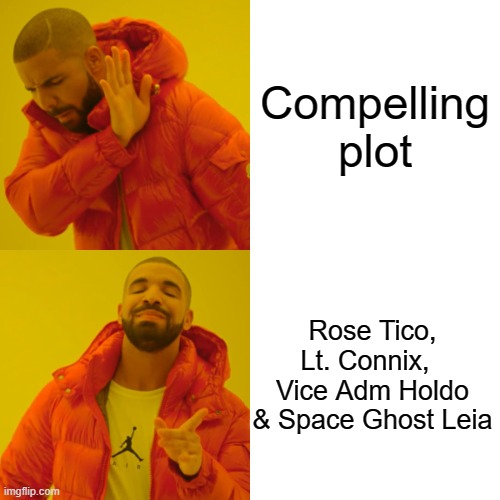
Kind of. The woke criticism is not the fact that Disney went with a diverse or woke casting for the sequel trilogy. The criticism is that there was a focus on creating a diverse or woke cast while there wasn't even a coherent story and direction for the trilogy. Yes, they were on a self-inflicted timetable, but if you're under the gun you need to work solely to achieve minimum viable product before making it look nice. There's nothing wrong with focusing on diverse casting,
as long as you get everything else right first and foremost. The focus on diversity should be far down the list of things to worry about and only come into play once everything else is solid.
Now here's the TLDR:
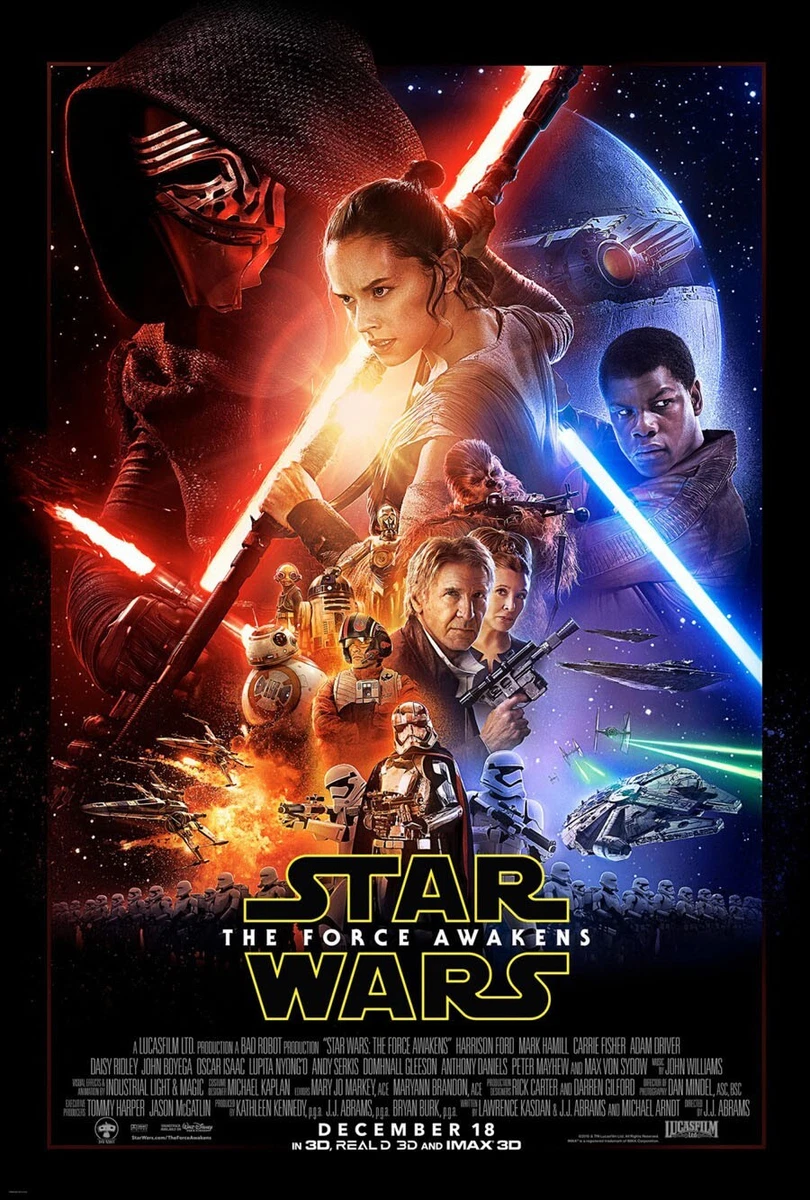
Part of it is that a focus on diversity is an artificial constraint. If you establish a quota for what a cast must look like, whether explicitly stated or just intended, you are creating requirements for what characters look like, their roles, and how many of them there are. If you really feel a need to have meaningful characters that check the boxes of being black, Asian, Hispanic, female, and gay, then you are constraining yourself to having a minimum of 4-5 characters with not insignificant screentime that check all of those boxes. That puts constraints on storytelling because you will need to split screentime between them all, and they all need their own development and arcs within the overall story. That means the overall story has to fit all of those things in it, too, and if you find that you can't fit them in within a reasonable runtime, along with plot, you have to start cutting elements while retaining your diversity goals.. Suddenly, the desire for diversity starts driving the bus instead of the bus picking up diversity. And granted, a lot of this won't be known until it's shot and you know exactly how long different scenes and sequences will take and it's all edited, but you should have at least some idea of a story is bloated with unnecessary stuff before all of that happens. I look at TFA and it's basically a remake of ANH, but it's ultimately 15 minutes longer and with more characters packed in. Rey is Luke, Han is Obi Wan, Poe is Leia, Kylo is Vader, and Finn is extra. Then there's Maz and Leia in side roles tagging up time, and it turns into just way too much. For the sake of simplicity they should have cut Poe and Finn completely, along with Phasma and some other crap, and really simplified things to give Rey more time and opportunity to develop. But if you do that, you're cutting out a lot of your diverse characters. If you have a goal of diversity and you're set on having them, that idea can't even be seriously considered when it comes to writing, so you you write around it.
On the other hand, you can develop a story and characters with no regard to diversity and remove the constraint to develop the best story and characters possible. If you have too many or some that just don't fit, they're easy to cut. Then you can consider who fills what role and what they look like. I posted this on another thread, but look at Alien. Ripley wasn't explicitly written as a woman, and the characters and story were all done with no regard to the final cast. Ripley was written as a generic character and Sigourney Weaver just happened to be cast for the role. The result was a really strong female character who launched a franchise, but 0 focus on diversity went into it. The best analogy I can give is designing a custom house: What's a more important place to start, the paint colors or the layout? A beautifully painted and decorated house is still going to suck if you forgot to put in a bathroom and it has no closets. A well designed and thought out house is easy to decorate and you can always wait to pick the best paint colors to fit a space.
Another part is opportunity cost. If you're writing or developing a story and spending time on creating or ensuring diversity, that is time you're not spending on something else, like a plot that makes sense or making characters that are relatable. I'm sure someone will disagree, but when you operate on a deadline, effort and time available to create a finished product become finite. Go back to the house analogy. If you are spending time looking at paint samples, you can't also spend that time looking at layouts. It doesn't really matter if you have no deadline because you have an infinite time horizon. If you need a decision by the end of the week to get your contractor going, then you need to focus on what is most important and driving all other decisions, the layout, before you start figuring out the aesthetics, the paint.
Lastly, I don't remember much of the marketing around TFA. That was all what feels like a lifetime ago. I don't know if Disney specifically promoted the diversity of the cast, if there was that kind of promotion in interviews, if it was just something jumped on by bloggers, critics, etc, or if it even existed at all. I will say that such marketing DOES create a perception that wokeness is driving decisionmaking, which in turn creates a perception that flaws in the end product are a result of that woke decision making. Whether that is true or not is kind of irrelevant because perception is reality. It can also be very alienating and set negative expectations, like with Snow White. Rachel Zegler's interviews and the reported initial decisions regarding the makeup of the dwarves, or magical creatures, absolutely poisoned that movie. No one knows if it'll be good or not, but there's a huge part of the potential audience that already wants nothing to do with it. I don't know if that's the case here, but it's certainly possible. I think maybe the big takeaway is that if the marketers (and cast/crew) define a movie as woke and that's the identity they choose for it, then that's how viewers will choose to frame their criticism as well.
And to sum it all up, to much of the fandom, the sequel trilogy focused on the paint and seemingly slapped everything else together on Friday. Andor spent all week on the layout, and then picked the paint to fit the space. Now, the overall quality of each may be a reflection of the different timelines for each, but the processes should have been the same and yet seem very different, outsider looking in.